· 8 min read
What are 7 steps of desalination
A Brief Look to Desalination Plants

What Are the 7 Steps of Desalination? A Complete Guide to Turning Seawater into Fresh Water
Desalination is the process of removing salt and other minerals from seawater or brackish water to make it safe for drinking and other uses. As freshwater scarcity becomes a growing concern worldwide, desalination plants are playing an increasingly important role in providing clean water to millions of people. But how does this remarkable process actually work?
In this guide, we’ll walk you through the seven essential steps of modern desalination, explaining how ocean water transforms into the fresh water flowing from your tap.
Understanding Desalination: Why It Matters
Before diving into the process, it’s worth understanding why desalination is so important. Over 97% of Earth’s water is salty seawater, while only 3% is fresh water—and much of that is locked in glaciers or underground. As populations grow and climate change affects traditional water sources, coastal communities are increasingly turning to the ocean as a reliable water supply.
The most common method used today is called reverse osmosis (RO), which accounts for about 70% of desalination worldwide. Let’s explore how this process works step by step.
Step 1: Intake - Bringing Seawater into the Plant
The desalination journey begins at the intake point, where seawater is drawn into the facility. This might sound simple, but it’s actually one of the most critical steps in the entire process.
Plants typically use one of two intake methods:
Open ocean intakes use large pipes extending into the sea, drawing water directly from the ocean. These systems often include screens to prevent fish and larger marine life from entering.
Beach well intakes collect water that naturally filters through sand and rock near the shoreline, providing a gentler and more environmentally friendly option that also pre-filters the water.
The intake system must be carefully designed to minimize impact on marine life while ensuring a steady supply of seawater. Modern plants incorporate protective measures like fish screens, reduced intake velocities, and strategic placement to protect ocean ecosystems.
Step 2: Pretreatment - Preparing the Water
Raw seawater contains much more than just salt. It carries sand, organic matter, bacteria, algae, and other particles that could damage the delicate equipment used later in the process. Pretreatment removes these materials and prepares the water for the main desalination step.
This stage typically includes several processes:
Screening and filtration remove larger particles like seaweed, sand, and debris using screens and filters of progressively finer sizes.
Coagulation and flocculation involve adding chemicals that cause small particles to clump together into larger masses, making them easier to remove.
Sedimentation allows these heavier particles to settle to the bottom of tanks, where they can be removed as sludge.
Disinfection uses chlorine or other disinfectants to kill bacteria and prevent biological growth that could clog the system.
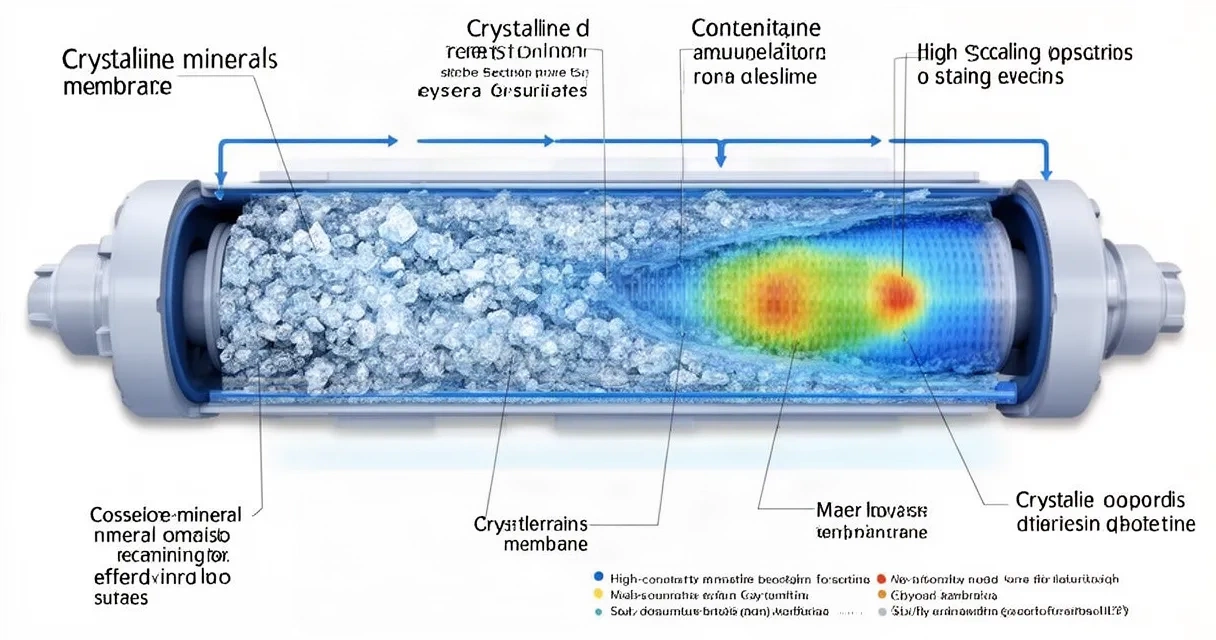
The quality of pretreatment directly affects the efficiency and lifespan of the expensive membranes used in the next stages. Poor pretreatment can lead to membrane fouling, reduced performance, and costly replacements.
Step 3: Filtration - Fine-Tuning Water Quality
After pretreatment, the water undergoes additional filtration to remove even smaller particles and impurities. This step acts as a final safeguard before the water reaches the reverse osmosis membranes.
Multimedia filters use layers of different materials like sand, gravel, and anthracite coal to trap particles of various sizes.
Cartridge filters with extremely fine pores (typically 5 microns or smaller) catch any remaining particles that escaped earlier filtration stages.
This stage is crucial because the reverse osmosis membranes used in the next step have microscopic pores that can easily become blocked by tiny particles. Think of it like protecting a high-end coffee machine—you wouldn’t want to run unfiltered tap water through it because the mineral buildup would eventually damage the equipment. The same principle applies here, but on a much larger scale.
Step 4: Reverse Osmosis - The Heart of Desalination
This is where the magic happens. Reverse osmosis is the core technology that actually removes salt from seawater, and understanding it doesn’t require a science degree.
Imagine a special filter so fine that water molecules can pass through, but salt and minerals cannot. That’s essentially what a reverse osmosis membrane does. However, water doesn’t naturally want to flow through such a tight filter, especially when salt is dissolved in it.
Here’s where pressure comes in. The filtered seawater is pumped at very high pressure (typically 800 to 1,200 pounds per square inch—about 40 times the pressure in a car tire) against these special membranes. The intense pressure forces water molecules through the membrane, leaving salt and other dissolved minerals behind.
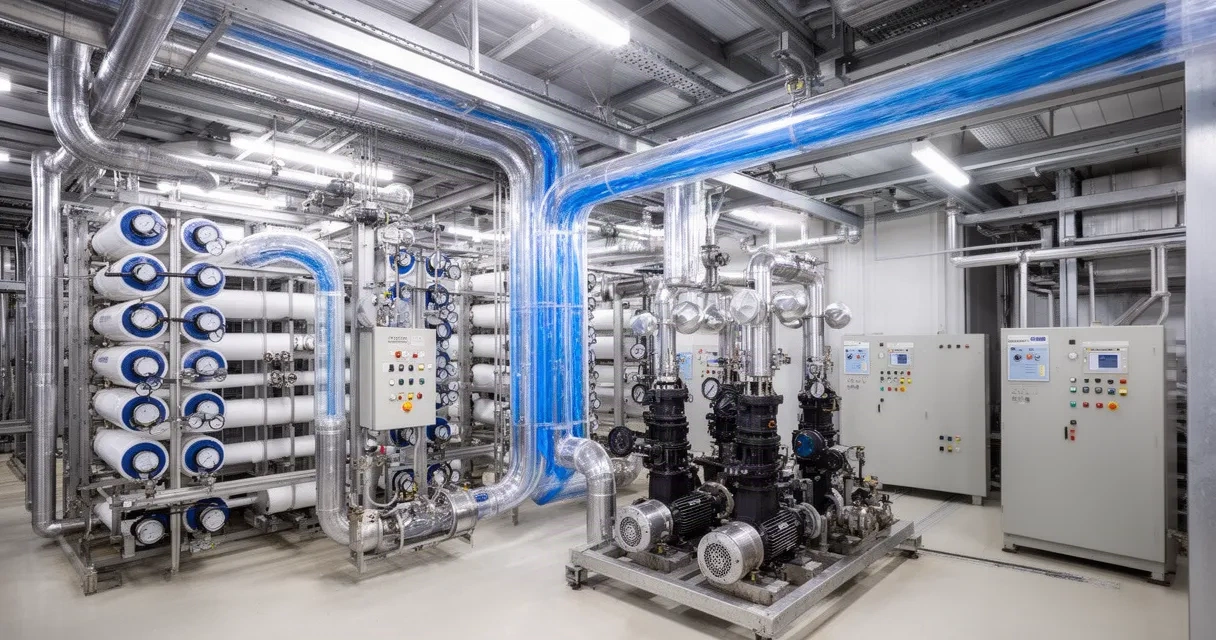
The membrane modules look like large cylinders, each containing spiral-wound sheets of membrane material. As water flows through these modules under pressure, it splits into two streams:
Permeate is the fresh water that passes through the membrane—this is the clean water we want.
Concentrate or brine is the salty water left behind, containing all the salt and minerals that couldn’t pass through the membrane.
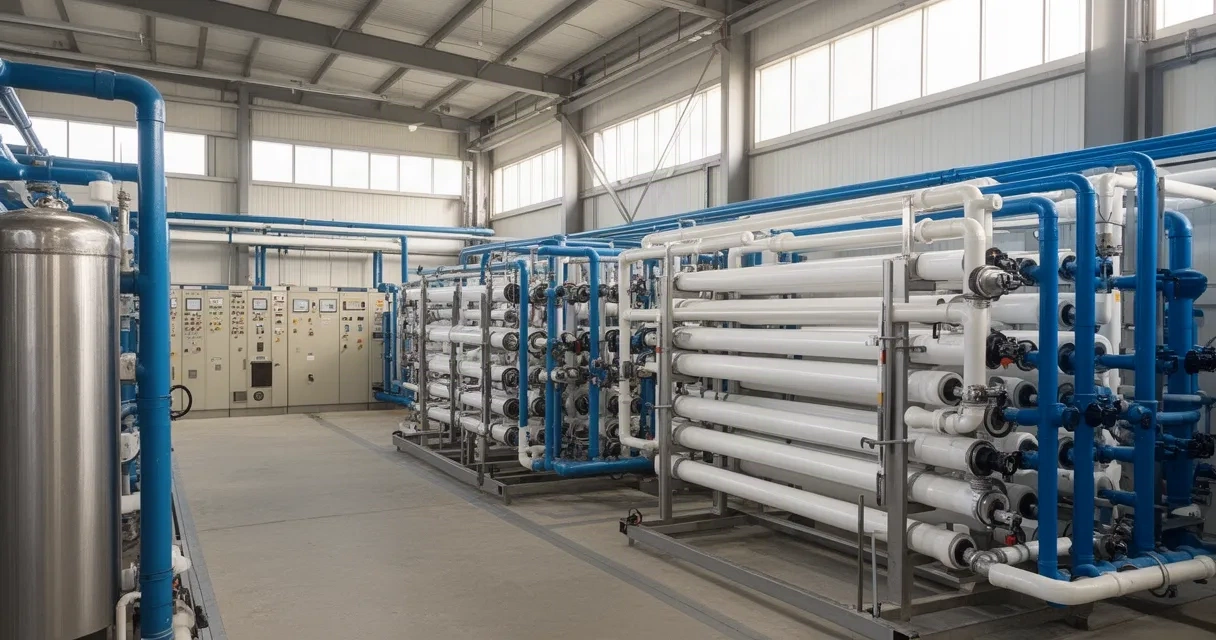
Modern desalination plants contain hundreds or even thousands of these membrane modules working simultaneously to produce large volumes of fresh water.
Step 5: Energy Recovery - Making the Process More Efficient
Here’s a challenge with reverse osmosis: pushing water through those membranes at such high pressure requires enormous amounts of energy. This makes desalination expensive and energy-intensive.
However, remember that concentrate stream we mentioned? It’s still under very high pressure even though it’s being rejected from the system. Simply dumping this high-pressure water would waste a huge amount of energy.
Energy recovery devices capture this pressure and use it to help pressurize incoming seawater. Think of it like a see-saw: the high-pressure concentrate flowing out helps push new seawater in, reducing the amount of energy needed from pumps.
Modern energy recovery systems can recapture up to 98% of the energy from the concentrate stream. This innovation has dramatically reduced the energy costs of desalination over the past few decades, making it more economically viable and environmentally sustainable.
Step 6: Post-Treatment - Making Water Safe and Stable
The water coming out of the reverse osmosis membranes is extremely pure—in fact, it’s too pure for drinking. While that might sound counterintuitive, water that’s completely free of minerals can actually be corrosive to pipes and doesn’t taste very good.
Post-treatment adjusts the water chemistry to make it safe and palatable:
pH adjustment neutralizes the water to prevent it from corroding distribution pipes. This typically involves adding lime or caustic soda.
Remineralization adds back small amounts of beneficial minerals like calcium and magnesium. These minerals improve taste and make the water less corrosive.
Disinfection provides a final treatment with chlorine or other disinfectants to ensure the water remains safe as it travels through the distribution system to homes and businesses.
This step ensures that the water leaving the plant meets all drinking water standards and tastes like the fresh water people expect from their taps.
Step 7: Brine Management - Dealing with the Leftover Salt
For every two gallons of seawater entering a desalination plant, roughly one gallon becomes fresh water and one gallon becomes concentrated brine. This brine contains about twice the salt concentration of normal seawater, plus chemicals used in the treatment process.
Responsible brine management is essential for environmental protection. Plants typically use one or more of these approaches:
Dilution and ocean discharge carefully returns the brine to the ocean in a way that rapidly dilutes it, minimizing impact on marine life. This often involves mixing it with cooling water from power plants or discharging it through diffusers that spread it over a wide area.
Deep well injection pumps brine deep underground into geological formations, keeping it away from surface waters.
Evaporation ponds allow brine to evaporate in arid regions, leaving behind salt that can sometimes be harvested for commercial use.
Zero liquid discharge uses advanced techniques to extract all the water, leaving only solid salt behind. This is the most environmentally friendly option but also the most expensive.
The choice of brine management method depends on local environmental conditions, regulations, and economic factors.
The Future of Desalination
Modern desalination technology has come a long way in recent decades. Energy consumption has dropped by more than 70% since the 1970s, and costs continue to fall as technology improves. Innovations like renewable energy integration, advanced membrane materials, and artificial intelligence for process optimization are making desalination increasingly efficient and sustainable.
As freshwater scarcity affects more regions worldwide, these seven steps of desalination are becoming a lifeline for millions of people. From the initial intake of seawater to the final management of brine, each step plays a vital role in transforming the ocean’s vast resources into the fresh water essential for life, agriculture, and industry.
Understanding this process helps us appreciate the technological achievement behind every glass of desalinated water—and the ongoing efforts to make this vital resource more accessible and sustainable for communities around the world.
Resources: