Published · Updated · Alper Yazagan · 13 min read
Reverse Osmosis Optimization: How Osmotic Pressure, Recovery and RO Data Affect Performance
Learn how osmotic pressure, recovery and normalized data affect RO performance, energy use, fouling risk and membrane health.
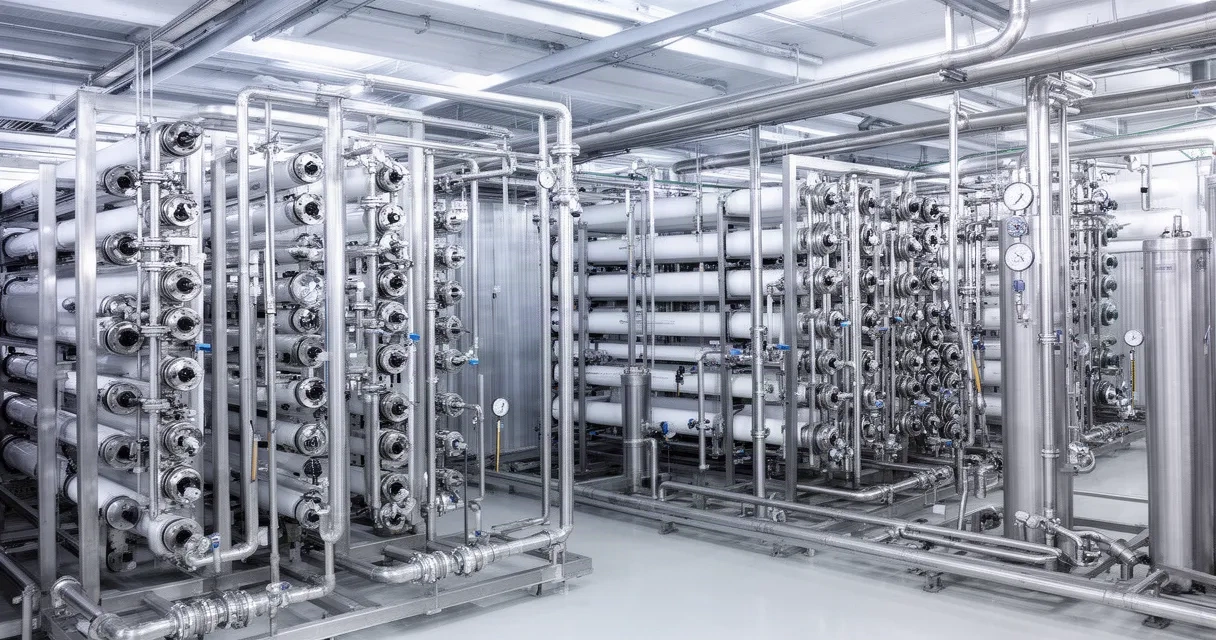
Reverse osmosis optimization is the process of finding operating conditions that meet required water production and permeate-quality targets while controlling energy use, fouling, scaling and membrane stress.
The important part is that these variables cannot be optimized independently. Raising pressure may increase permeate production, but it can also increase energy demand. Increasing recovery can reduce concentrate volume, but it also raises salt concentration, osmotic pressure and scaling risk. A setting that looks efficient today may no longer be efficient when feed temperature or salinity changes.
At the center of these trade-offs is osmotic pressure. Understanding how osmotic pressure changes through an RO system makes it much easier to understand why feed pressure, recovery, membrane flux and energy consumption need to be optimized together.
What Is Osmosis?
Osmosis is the natural movement of water through a semipermeable membrane from a solution with lower solute concentration toward one with higher solute concentration.
As this process continues, a pressure difference develops. The pressure required to stop the net osmotic movement of water is called osmotic pressure.
Reverse osmosis does exactly what its name suggests. Instead of allowing water to move naturally toward the more concentrated solution, an RO system applies hydraulic pressure to the saline side of the membrane. When the applied pressure is high enough, water is driven through the membrane while most dissolved salts remain in the concentrate stream.
For RO operators, the practical consequence is simple:
Higher salinity generally means higher osmotic pressure, and higher osmotic pressure means more hydraulic pressure is required to produce the same amount of permeate.
That is why osmosis is not just a textbook concept. It directly affects plant energy consumption and operating limits.
Osmotic Pressure and Net Driving Pressure in Reverse Osmosis
The pressure shown at the discharge of an RO high-pressure pump is not the pressure that actually drives water through the membrane.
What matters is the net driving pressure, or NDP.
In simplified form:
Membrane water production is therefore related not simply to applied pressure, but to the amount of pressure remaining after the osmotic-pressure difference across the membrane is overcome.
DuPont’s current FilmTec technical manual describes membrane permeate flow as proportional to membrane area and the difference between hydraulic and osmotic pressure. It also illustrates an important effect inside a pressure vessel: as water is removed as permeate, the remaining concentrate becomes more saline and its osmotic pressure rises, while feed-side hydraulic pressure gradually falls because of pressure losses.
The result is that net driving pressure generally changes as water travels through an RO array.
This has an important operational implication:
A single feed-pressure value does not tell you whether the entire membrane train is operating efficiently.
Stage configuration, pressure drop, salinity, recovery, membrane condition and concentration polarization all matter.
Why Higher Recovery Is Not Always Better
RO recovery is the percentage of feed water converted into permeate:
Increasing recovery can be attractive because a larger fraction of the incoming water becomes product water. But the water leaving the system as concentrate contains most of the salts rejected by the membrane.
As recovery increases, concentrate salinity rises.
That creates several effects at the same time:
- osmotic pressure increases
- net driving pressure decreases unless hydraulic pressure is adjusted
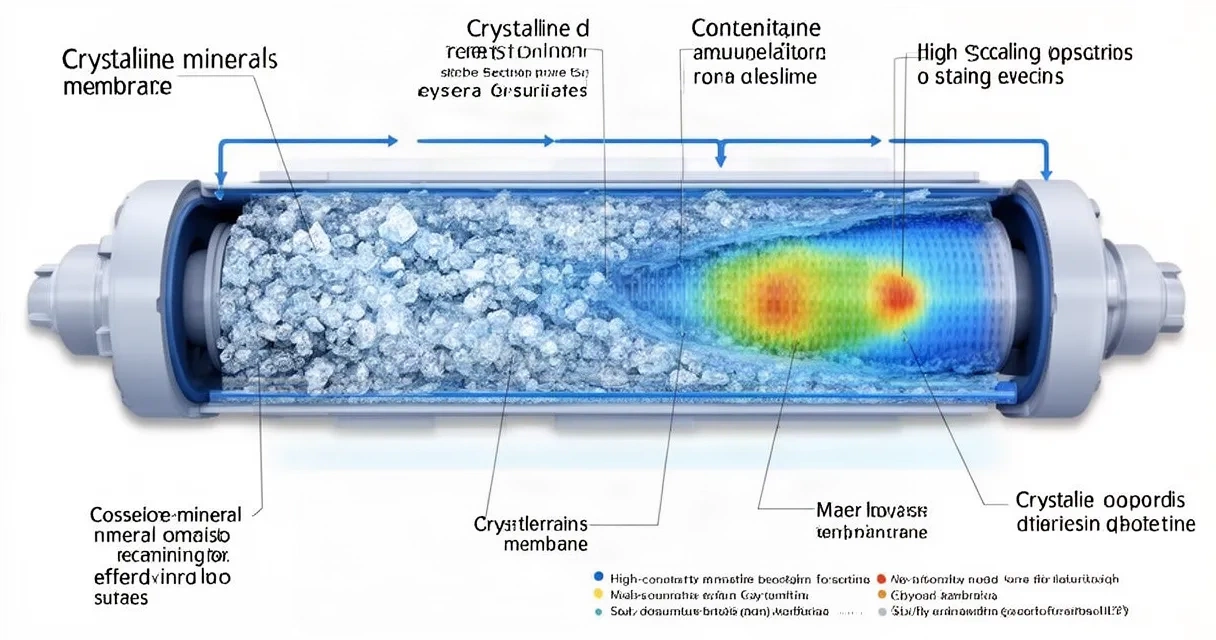
- scaling potential can increase
- concentration polarization becomes more important
- the final elements in an array may operate under substantially different conditions from the first elements
This is why the maximum technically achievable recovery is not automatically the most economical recovery.
The best operating region depends on feed-water chemistry, membrane type, array configuration, pretreatment, production requirements, energy cost and system limits.
Key principle: Optimize the whole system, not a single setpoint. Pressure, recovery and flux should be evaluated together.
Key Parameters for Reverse Osmosis Optimization
A useful optimization strategy begins with good plant data. Looking at one variable in isolation can easily produce the wrong conclusion.
| Parameter | Why it matters |
|---|---|
| Feed pressure | Shows the hydraulic pressure supplied to the RO train |
| Concentrate pressure | Helps determine pressure drop across the system |
| Permeate flow | Measures actual water production |
| Feed and concentrate flow | Required to calculate recovery and hydraulic loading |
| Feed conductivity or TDS | Indicates the salt load entering the system |
| Permeate conductivity | Tracks water quality and changes in salt passage |
| Temperature | Strongly affects membrane permeability and therefore apparent production |
| Recovery | Determines how strongly salts are concentrated through the system |
| Differential pressure | Can help identify hydraulic restrictions, fouling or other changes |
| Normalized permeate flow | Helps distinguish real membrane-performance decline from changing operating conditions |
| Normalized salt passage | Helps identify changes in rejection independently of normal operating variation |
| Specific energy consumption | Shows how much electrical energy is required per unit of produced water |
| pH and relevant feed chemistry | Important for evaluating scaling and pretreatment requirements |
The exact instrumentation required varies by plant, but the principle remains the same: optimization requires enough information to distinguish changes in operating conditions from changes in membrane condition.
Why Raw RO Data Can Be Misleading
Imagine that permeate flow drops on a cold morning.
Has the membrane fouled?
Not necessarily.
RO membrane permeability changes with temperature. Feed salinity, pressure and recovery also influence permeate production and salt passage. Comparing today’s raw flow directly with a reading taken under different conditions can therefore create a false diagnosis.
This is why RO performance normalization is so important.
ASTM D4516 specifically addresses the standardization of RO performance data. It notes that changes in pressure, temperature, conversion and feed concentration can change permeate flow and salt passage, and that performance should therefore be converted to comparable reference conditions before trends are evaluated.
DuPont similarly recommends plant-performance normalization to separate normal changes caused by operating conditions from changes associated with problems such as fouling or scaling. Its technical guidance highlights normalized permeate flow, normalized salt passage and pressure drop as important performance indicators.
In practice, the workflow should look more like this:
rather than:
That distinction becomes increasingly important as plants move toward automated and AI-assisted optimization.
Practical Strategies for RO System Optimization
1. Optimize Pressure, Recovery and Flux Together
Increasing feed pressure can restore or increase permeate production, but pressure should not be treated as a universal solution.
If production has fallen because of fouling, simply increasing pressure may mask the underlying problem while increasing energy consumption.
Similarly, increasing recovery may improve water utilization while simultaneously increasing osmotic pressure and scaling risk.
The better question is not:
“Can we increase recovery?”
It is:
“At the required production and water quality, which combination of pressure, recovery and flow gives the best overall operating result while remaining inside system constraints?”
2. Normalize Performance Before Diagnosing Membrane Problems
Track normalized performance rather than relying only on raw daily values.
Important trends include:
- normalized permeate flow
- normalized salt passage or rejection
- differential pressure
- stage-level changes where instrumentation is available
Trend direction and the part of the system affected can often provide more useful information than a single measurement.
3. Control Scaling Before It Reaches the Membrane
Higher recovery increases the concentration of dissolved salts in the concentrate stream.
Depending on feed-water chemistry, this can move sparingly soluble salts closer to precipitation. Feed analysis, appropriate pretreatment, pH control where applicable, antiscalant selection and operation inside suitable recovery limits are therefore part of RO optimization rather than separate concerns.
Scaling is especially important near the concentrate end of an RO train, where salt concentration is highest.
4. Treat Pretreatment as Part of RO Performance
RO optimization starts before water reaches the RO membrane.
Particulate, colloidal, biological and organic loading can change pressure drop and membrane performance. If pretreatment is unstable, repeatedly adjusting RO pressure will not solve the underlying cause.
Plant optimization should therefore consider pretreatment performance together with membrane-train data.
5. Use Energy Recovery Where Appropriate
In seawater RO plants, the concentrate stream leaves the membrane system at high pressure. Energy recovery devices can transfer much of this pressure energy back into the process.
They are therefore a major part of energy-efficient SWRO design.
However, an energy recovery device does not eliminate the need for operating optimization. Pump efficiency, membrane condition, recovery, pressure losses and changing feed conditions still influence specific energy consumption.
6. Base Cleaning Decisions on Performance, Not Only the Calendar
Cleaning too late can allow deposits or biofilm to become difficult to remove. Cleaning unnecessarily also creates downtime, chemical consumption and membrane exposure to cleaning conditions.
A better maintenance strategy combines normalized performance trends, pressure-drop behavior, water quality, plant history and the membrane manufacturer’s operating guidance.
The purpose is not simply to clean less often.
It is to clean when the condition of the system justifies it. For broader context on membrane condition and replacement decisions, see Clewas’s reverse osmosis membrane replacement guide.
What Should RO Operators Monitor Regularly?
A plant dashboard contains hundreds or thousands of data points, but a relatively small set often gives the first indication that something important is changing.
Operators should pay particular attention to trends in:
Normalized permeate flow. A downward trend can indicate loss of membrane productivity once temperature, salinity and pressure effects have been accounted for.
Normalized salt passage. A rising trend can indicate deterioration in rejection or another membrane/system problem.
Differential pressure. Increasing pressure drop at comparable flow conditions can point toward increasing hydraulic resistance.
Recovery. Unexpected changes affect concentration, osmotic pressure and system loading.
Feed and permeate conductivity. These provide context for changing salinity and water quality.
Specific energy consumption. Increasing energy required per cubic meter of permeate can reveal operating deterioration even when production remains apparently normal.
The key is to evaluate these parameters together rather than treating individual alarms as independent events.
How AI Can Improve Reverse Osmosis Optimization
RO optimization is a good candidate for data-driven methods because several interacting variables change continuously.
Feed temperature may change while salinity changes. Membrane condition evolves over time. Production targets change according to demand. Operators must keep the plant inside water-quality, hydraulic and membrane constraints while also trying to reduce operating cost.
A useful optimization system therefore needs more than a single sensor reading.
Depending on the application, inputs can include:
- PLC and SCADA measurements
- historical plant performance
- membrane and plant design data
- laboratory water-quality measurements
- maintenance history
- operator actions and logs
- production requirements
A model can use these data to estimate how the plant is likely to respond to different operating conditions.
Instead of asking an operator to change a setpoint and wait to see what happens, an optimization layer can evaluate alternatives first.
For example:
- Input
- current feed conditions, membrane performance and production requirement
- Constraints
- permeate quality, membrane limits, scaling risk and equipment limits
- Optimization objective
- reduce energy or operating cost while meeting the production target
- Output
- recommended operating setpoints and predicted plant response
This is a much more useful application of AI than simply displaying another dashboard.
The objective is to help operators answer a practical question:
Given the plant’s condition right now, what operating settings are most appropriate for the result we need?
Clewas ROMax is designed around this type of workflow, combining plant operating data with historical, design and water-quality information to support operating recommendations and performance analysis.
Reverse Osmosis Optimization Checklist
Before changing operating setpoints, ask:
- Are current flow and rejection values normalized to comparable conditions?
- Has feed temperature or salinity changed?
- Has pressure drop changed?
- Has normalized permeate flow changed?
- Has normalized salt passage changed?
- Is recovery still within the intended operating range?
- Could scaling, fouling or pretreatment performance explain the change?
- What happens to specific energy consumption if the proposed setpoint is changed?
- Will the change remain within membrane and equipment limits?
- Does the plant actually need the same production rate right now?
The purpose of optimization is not to keep every setpoint constant.
It is to continually operate the plant within the best available operating region for current conditions.
Frequently Asked Questions
What is reverse osmosis optimization?
Reverse osmosis optimization is the process of adjusting and managing RO operating conditions to meet production and permeate-quality requirements while controlling energy use, fouling, scaling and membrane stress. Pressure, recovery, flow, feed conditions and membrane performance should be considered together.
How does osmotic pressure affect reverse osmosis?
Osmotic pressure opposes the hydraulic pressure used to drive water through an RO membrane. As feed or concentrate salinity rises, osmotic pressure rises. More applied pressure may therefore be required to maintain the same net driving pressure and permeate production.
Does increasing RO pressure always improve efficiency?
No. Higher pressure can increase permeate flow, but it also increases pump energy demand. If poor performance is being caused by fouling, scaling or another problem, increasing pressure can hide the symptom rather than correct the cause.
What is the best recovery rate for an RO system?
There is no universal optimal recovery rate. It depends on feed-water chemistry, membrane type, array design, scaling limits, pressure, pretreatment, production requirements and economics. The highest achievable recovery is not necessarily the lowest-cost operating point.
Why should RO performance data be normalized?
Temperature, salinity, pressure and recovery can change apparent RO performance even when the membrane itself has not deteriorated. Normalization converts operating data to comparable reference conditions so real membrane-performance trends are easier to identify.
Which RO parameters are most useful for detecting performance problems?
Normalized permeate flow, normalized salt passage, differential pressure, conductivity, recovery and specific energy consumption are particularly useful when analyzed as trends and in the context of feed conditions.
How can AI optimize a reverse osmosis plant?
AI and other data-driven models can analyze plant conditions, historical behavior and operating constraints to evaluate possible setpoints before changes are made. They can support decisions involving pressure, recovery, production, energy use and maintenance while predicting likely consequences.
Technical Sources
This guide uses established RO engineering principles and should be interpreted alongside the design limits and operating recommendations of the membrane and equipment used at each plant.
Key technical references include:
- ASTM D4516-19a, Standard Practice for Standardizing Reverse Osmosis Performance Data
- DuPont Water Solutions, FilmTec Reverse Osmosis Membranes Technical Manual, Form No. 45-D01504-en, Rev. 20, August 2026
- Plant-specific membrane-element data sheets and manufacturer operating guidelines
Turn Your Historical RO Data Into an Optimization Baseline
If you want to understand where your RO plant may be losing efficiency, Clewas offers a free historical-data analysis to identify optimization opportunities before any plant-wide implementation.
Use your existing operating data to establish a baseline, investigate performance trends and evaluate where optimization may be worthwhile.